

Airlines canceled more than 100,000 US flights last year, and if yours was one of them, you're probably wondering what actually caused it, and whether that reason gets you anything more than an apology. Cancellations often trace back to a handful of recurring causes, from weather to crew shortages to the airline's own scheduling, and which one applies to your flight decides what you might be owed.

Quick answer: if your flight is canceled and you decide not to fly, US law entitles you to a cash refund automatically. You don't have to ask for it. Whether you're owed anything beyond that comes down to what caused the cancellation, and that's what this guide walks you through.
The Department of Transportation's Air Travel Consumer Report shows the cancellation rate creeping up: 1.29% of scheduled flights in 2023, 1.4% in 2024, and 1.53% in 2025. That's a small percentage, but across a network handling tens of thousands of US flights a day, it adds up to more than 100,000 canceled flights a year.
Below are the 10 most common reasons behind these cancellations, and what each one means for your rights.
1. Dangerous weather
Weather is the single biggest cause of cancellations, and it's rarely just a bit of rain. When an airline pulls a flight for weather, conditions are usually bad enough that flying isn't safe: heavy snow and ice, high crosswinds, thunderstorms, or fog thick enough to cut visibility.
Not every weather problem ends in a cancellation, though. With thunderstorms or high winds, an airline will often delay a flight rather than cancel it outright, waiting for conditions to clear.
Winter storms show how fast this scales. In January 2024, a single storm system led to more than 2,000 US flight cancellations in one day, according to FlightAware data reported by Reuters. Because the US flight network is so interconnected, a storm at one hub can cause cancellations at airports that never saw a flake of snow.
Weather cancellations are almost always classified as extraordinary circumstances, which matters for what you're owed. More on that below.
2. Security concerns
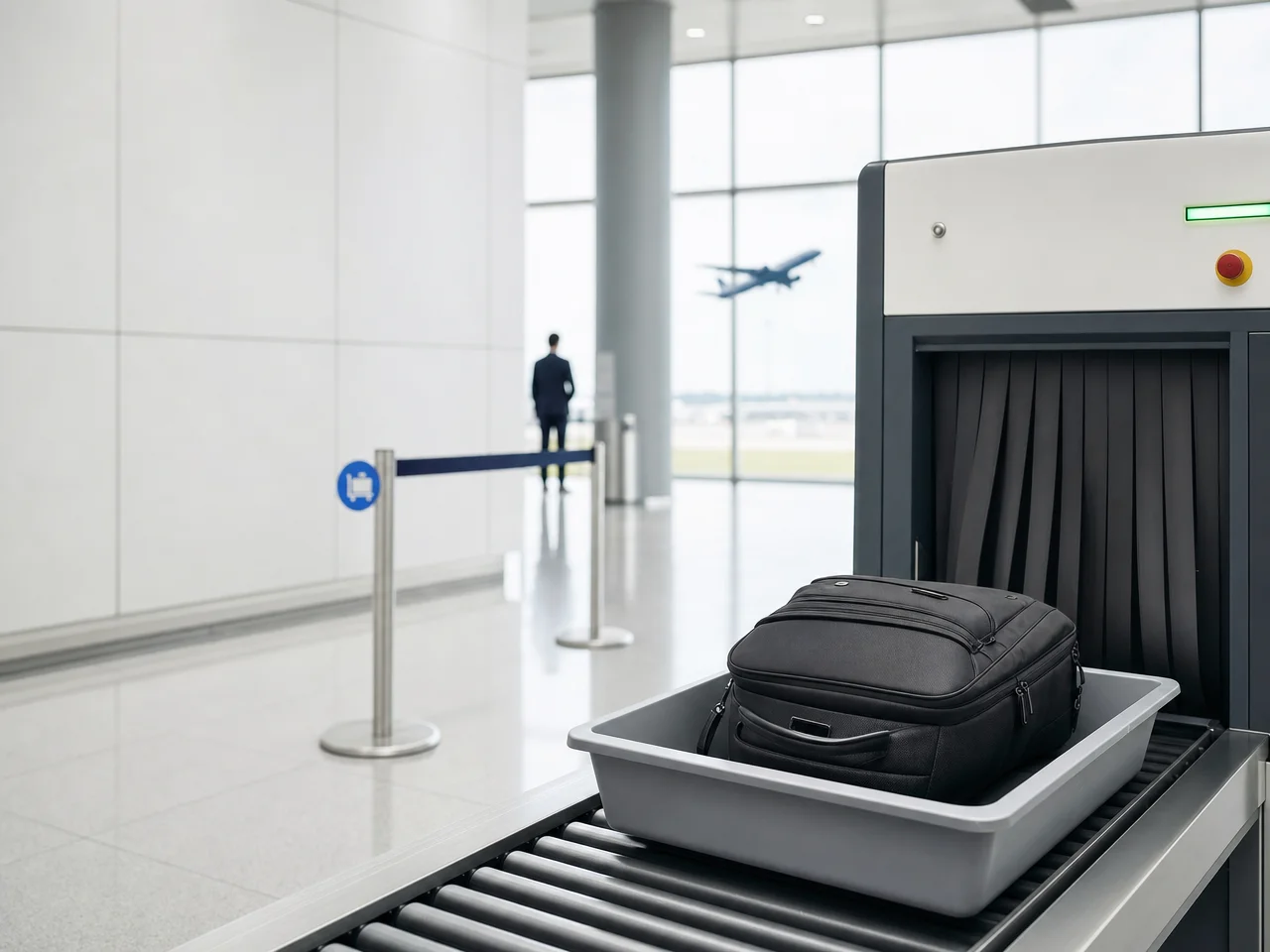
Security incidents can ground a flight fast. A bag that triggers an alarm may need a manual search that holds up the whole aircraft. An unruly passenger who won't follow crew instructions can force a diversion or cancellation if they need to be removed. Airport lockdowns, credible threats, and civil disturbances near an airport fall into this category too. Like weather, these count as extraordinary circumstances outside the airline's control.
3. Tight schedules and knock-on delays
Aircraft don't sit idle between flights. Cleaning, refueling, baggage, and crew changes all happen in a small space of time. When one flight runs late, that window shrinks, and delays compound through the day. By evening, an airline may cancel the last rotation rather than run it hours late. A single early-morning problem turns into cancellations across an entire schedule, and because it starts with the airline's own planning, it usually counts as controllable.
4. Mechanical or maintenance issues
Every aircraft goes through scheduled inspections, and unscheduled mechanical problems can come up too. If a plane is grounded for repairs and there's no spare aircraft to take its place, the flight gets canceled. Airlines also run tighter on spare aircraft during peak travel periods. Mechanical issues found during routine maintenance are treated as within the airline's control.
5. Not enough passengers
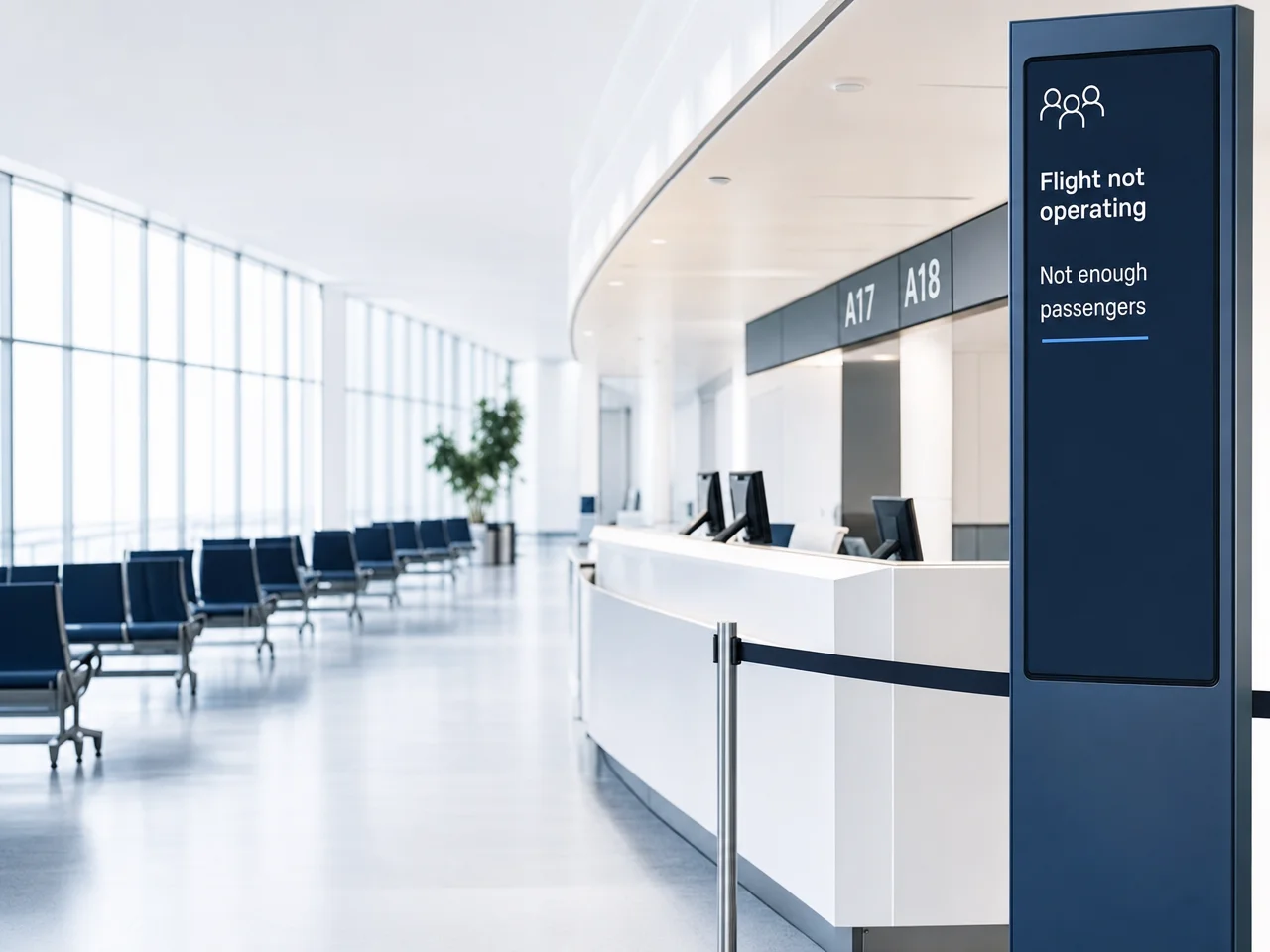
On less busy routes, an airline may cancel or combine a flight that isn't selling well enough to cover its costs. Fuel, crew, and airport fees don't scale down just because the plane is half empty. That's a business decision, so a passenger-count cancellation is treated as controllable.
6. Air traffic control restrictions
When traffic exceeds what the airspace or a specific airport can safely handle, air traffic control can impose ground stops or slow the rate of arrivals and departures. Airlines then have to adjust: rerouting, delaying, or canceling flights to comply. Because this comes from outside the airline, it's treated as outside of their control.
7. Technical and computer system failures
System outages can ground flights just as easily as a snowstorm. In January 2023, a nationwide FAA computer outage grounded flights across the country. In July 2024, a flawed CrowdStrike software update crashed Windows-based systems industry-wide. Delta Air Lines alone canceled roughly 7,000 flights over five days, according to the airline's own SEC filing, and the Department of Transportation later classified the disruption as a controllable event tied to the airline's response, not the outage itself.
Delta's CEO, Ed Bastian, called it "an operational disruption of this length and magnitude" that was "unacceptable" in a filing with the SEC, adding that Delta's customers and employees deserved better.
8. Not enough pilots or crew
Airlines need pilots, flight attendants, and ground crew in the right place at the right time, and a shortage anywhere in that chain can cancel a flight. Staffing problems can quickly create a domino effect. If a crew's earlier flight is delayed or canceled, they may not legally be cleared to work the next one. Crew-related cancellations are generally treated as controllable.
9. A pilot who's unfit to fly
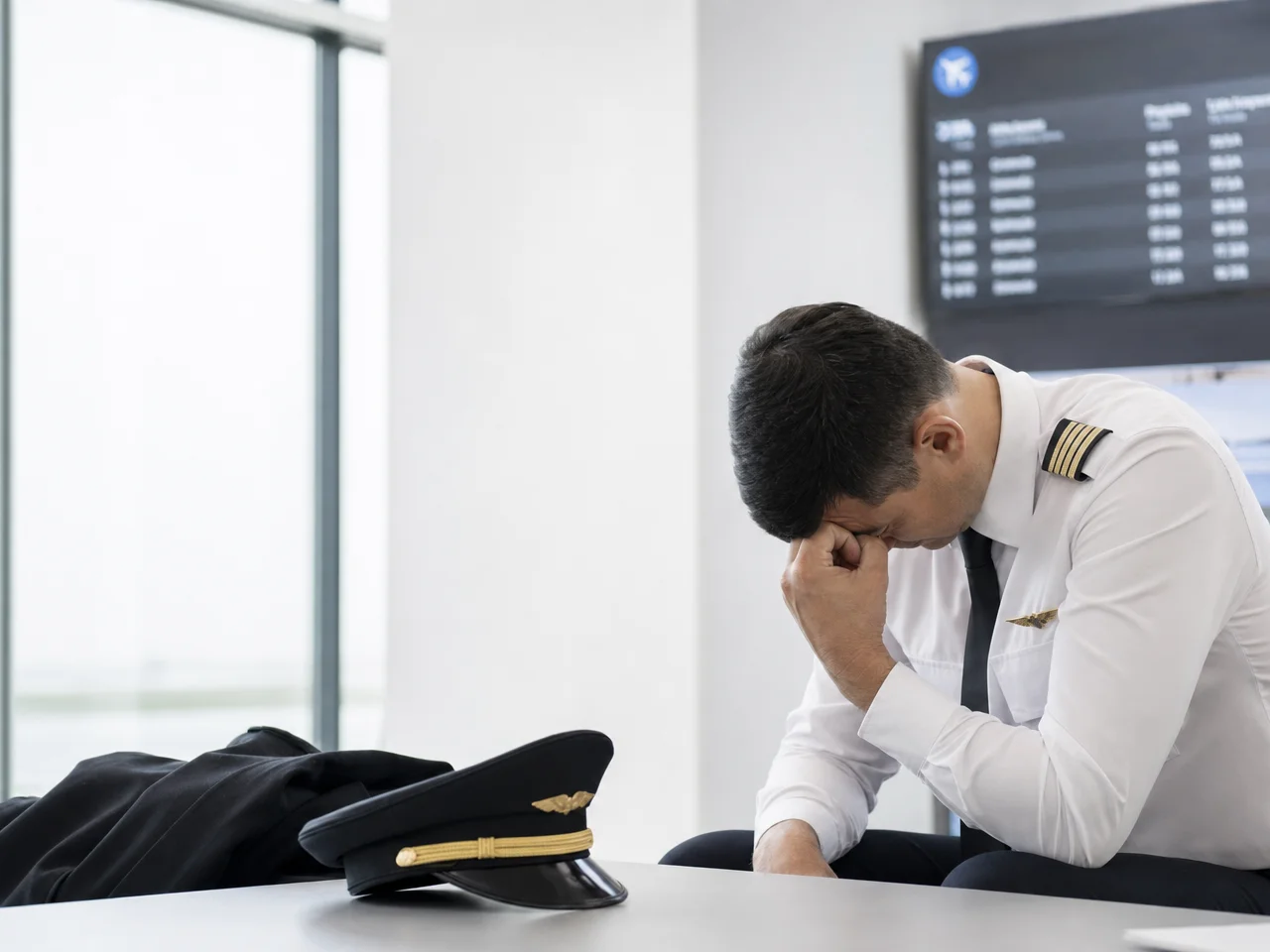
Pilots get sick or hit mandatory rest limits just like anyone else, and if there's no qualified replacement on hand, the flight doesn't go. It's one of the less common reasons on this list, but it still comes down to the airline's own staffing rather than the weather or the airspace.
10. Bird strikes
A bird strike can damage an engine, front window, or nose cone badly enough that the aircraft needs inspection or repair before it can fly again. If there's no backup aircraft available, the flight gets canceled. Bird strikes are treated as extraordinary circumstances.
Controllable vs. extraordinary: which cancellations get you paid
Not every canceled flight gets you extra help. The Department of Transportation's Airline Customer Service Dashboard sorts cancellations the same way most airlines do internally: was the cause something the airline could have controlled, like a mechanical issue or a staffing gap, or something outside its control, like weather? The major US airlines have committed to covering meals, and in most cases a hotel, when a cancellation falls into the controllable category.
Here's how the 10 reasons above usually sort.
Reason for cancellation | Usually counted as | Meals/hotel likely (US)? | Compensation likely (EU261/UK261)? |
Dangerous weather | Extraordinary | No | No |
Security threat or lockdown | Extraordinary | No | No |
Air traffic control restriction | Extraordinary | No | No |
Bird strike | Extraordinary | No | No |
Mechanical or technical fault* | Airline's control | Usually yes | Usually yes |
Lack of pilots or crew | Airline's control | Usually yes | Usually yes |
Pilot unfit to fly, no standby crew | Airline's control | Usually yes | Usually yes |
Tight schedule, knock-on delays | Airline's control | Usually yes | Usually yes |
Too few passengers | Airline's control | Usually yes | Usually yes |
Staff strike | Airline's control | Usually yes | Usually yes |
*A routine mechanical fault found during scheduled maintenance still counts as controllable under EU law. Being unexpected doesn't excuse it. A strike by the airline's own staff also counts as controllable, but a third-party strike, like one by air traffic controllers, does not.
Your rights if your flight was canceled in the US
US rules work differently from Europe's. There's no fixed cash payout tied to how long a delay runs. But under the Department of Transportation's automatic refund rule, if your flight is canceled or significantly changed and you decide not to travel, the airline owes you a cash refund automatically. You don't have to ask for it or fight for it.
What counts as "significant": a departure or arrival that shifts by more than 3 hours on a domestic flight or 6 hours internationally, a change to a different airport, an added connection, or a downgrade in service.
How fast you're paid: within 7 business days if you paid by credit card, or 20 calendar days for cash or check.
If the cancellation was the airline's fault, like a mechanical problem or a staffing gap, most major US carriers will also rebook you for free and cover meals, plus a hotel if you're stranded overnight. If weather or air traffic control caused it, you still get your refund if you choose not to fly, but the airline isn't required to cover meals or a hotel.
Paul Hudson, president of the passenger advocacy group FlyersRights, has pointed to the refund rule as a real shift. Before it took effect, refund practices varied from airline to airline. Now there's a fixed requirement that applies no matter why the flight didn't go, including bad weather, and an airline that violates it can be fined.
If your trip touched Europe or the UK
EU261 and UK261 don't cover every flight that touches Europe. What decides coverage is where your trip starts and ends, and which airline operates it, not just because you connect through an EU or UK airport. Here's how that plays out for common situations.
Your situation | EU261 / UK261 compensation? |
Your flight departs from an EU or UK airport, on any airline | Yes |
Your flight departs outside Europe and arrives at an EU or UK airport, on an EU or UK airline | Yes |
Your flight departs outside Europe and arrives at an EU or UK airport, on a non-EU/UK airline | No |
Your trip starts and ends outside Europe, with a connecting flight through an EU or UK airport, on any airline | No |
Your layover in Europe is 24+ hours and booked as a separate ticket | That leg counts as its own trip, apply these rules to it separately |
Flight distance | EU261 compensation | UK261 compensation |
Up to 1,500 km | €250 (approx. $290) | £220 (approx. $300) |
1,500–3,500 km | €400 (approx. $465) | £350 (approx. $475) |
Over 3,500 km | €600 (approx. $700) | £520 (approx. $705) |
USD figures are approximate conversions and move with exchange rates. The euro or pound amount is what's legally owed.
What to do the moment your flight is canceled
- Get rebooked fast. Ask at the gate while also calling or using the airline app, whichever contact method moves first.
- Save the evidence. Keep the cancellation notice, your boarding pass, and whatever reason the airline gives you.
- Ask for care. Request meal vouchers if you're stuck for hours, and a hotel plus transport if it's overnight.
- Choose rebooking or a refund. You're not required to accept a travel voucher. See how to get your money back if you'd rather have the cash.
- Check for extra compensation. If Europe was involved and the cause was within the airline's control, you may be owed cash on top of your refund.
Figuring out how much you're owed for a disrupted flight can be complicatedLet us assess your compensation for free — no paperwork, no risk.Check your flight
How to reduce your chances of a canceled flight
- Book the first flight of the day — it hasn't yet absorbed the day's knock-on delays.
- Fly nonstop. Every connection is another aircraft and crew that has to show up on time.
- Pick a route with several flights a day, so there's a same-day backup if yours is canceled.
- Favor airlines that are most reliable and have strong on-time records, and watch out for airports where delays and cancellations are more common.
What to do next
Most cancellations trace back to one of these ten causes, and knowing which one applies to you is the fastest way to find out what you're owed. If the airline caused it, you may be entitled to a hotel, meals, and cash compensation on top of your refund if Europe was part of your trip. If it was genuinely outside the airline's control, you're still entitled to a refund if you decide not to fly.
If your flight was recently canceled, it's worth checking what you can recoverFree eligibility check in under 3 minutes.Check your flight