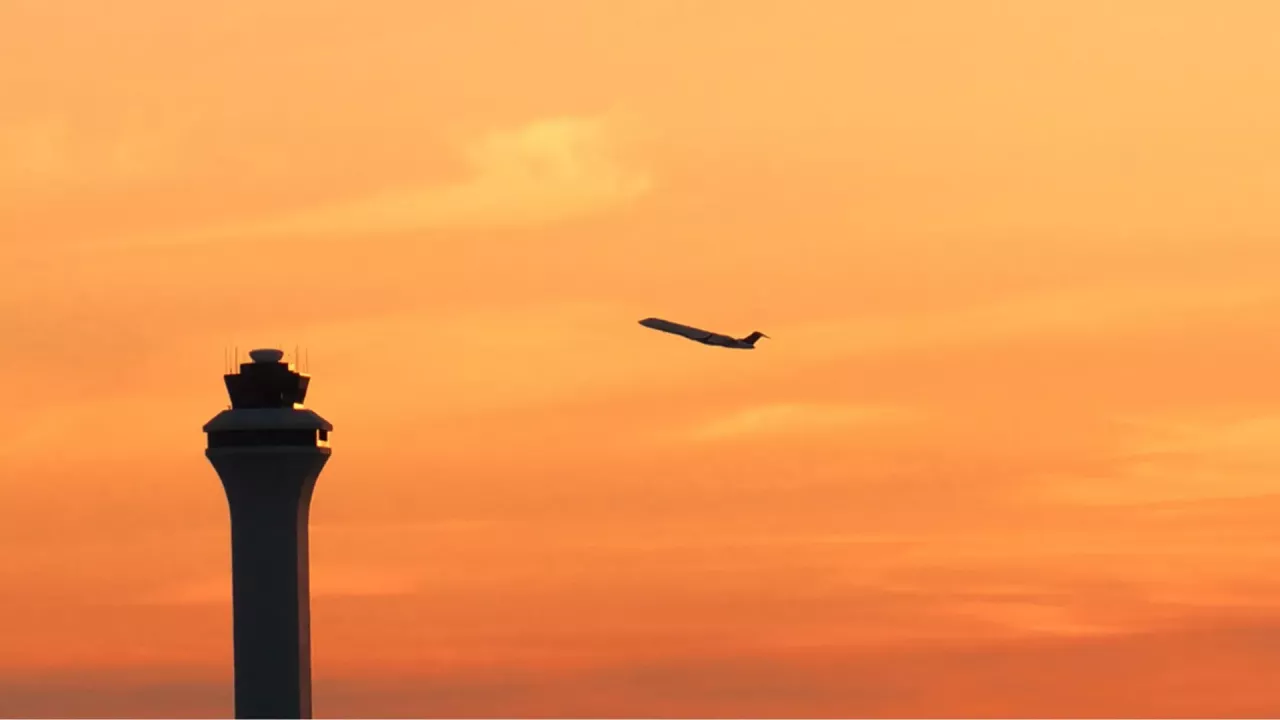



You're at the airport, bags packed, vacation plans set, and then you see it. "CANCELLED" flashing next to your flight number. The gate agent mentions something about "air traffic control," and you're left wondering: What does that mean? And more importantly, what are you entitled to?
Air traffic control issues cause thousands of flight cancellations across the US every year. But here's what most travelers don't understand: who's really responsible, what causes these disruptions, and what rights you actually have when ATC problems derail your plans.
Disrupted flight? You might have a right to compensation - up to €600Check Your Flight
What does air traffic control actually do?
Think of air traffic controllers as the unseen orchestrators of the skies. From ground-based facilities across the country, these highly trained professionals manage one of the most complex transportation systems in the world.
Their responsibilities are immense:
- Managing traffic flow for planes arriving and departing
- Providing real-time information and critical support to pilots
- Preventing collisions by maintaining safe distances between aircraft
- Monitoring airspace within their assigned regions
To keep everyone safe, controllers enforce strict separation rules. This means planes must stay a certain distance apart at all times. During peak travel periods like summer vacation or Thanksgiving, airspace can become so congested that controllers must make tough safety decisions. Unfortunately, those decisions sometimes mean delays and cancellations.
Here's an important distinction many travelers miss: Air traffic control doesn't cancel flights. Airlines do. But ATC can request that airlines cancel flights when safety requires it.

What happens when ATC leads to a canceled flight
The United States national airspace system is under unprecedented strain. When you combine booming demand with weather events, equipment limitations, and staffing shortages, you get a perfect storm for disruptions.
The Domino Effect
Picture this: A line of thunderstorms rolls through the Midwest. ATC reroutes traffic around the weather, which creates congestion. Departure slots fill up, and more flights get delayed. Soon, what started as a weather issue becomes a cascade of problems throughout the day, even after the storms clear.
When this happens, controllers may ask airlines to reduce their schedules to maintain safety.
The ATC staffing crisis and how it can affect flights
Many US flight delays and cancellations are increasingly linked to a shortage of air traffic controllers. According to a 2025 Government Accountability Office (GAO) report, the FAA has about 6 percent fewer controllers than it did a decade ago, even though the number of flights has grown by roughly 10 percent over the same period.
A National Academies of Sciences, Engineering, and Medicine report found that many FAA facilities, including those serving major airports, are operating below recommended staffing levels. When traffic surges or disruptions occur, these shortages can quickly limit how many flights can safely operate.
The issue became more visible during the 2025 federal government shutdown, when air traffic controllers continued working without pay while hiring and training were paused. During that period, staffing constraints contributed to delays and reduced capacity at several major US airports.
FAA workforce planning documents show that training a new controller can take several years, meaning staffing gaps cannot be closed quickly. Until then, the FAA may impose traffic flow restrictions to maintain safety, which often leads to delays and cancellations during busy travel periods.
Who oversees ATC?
In the United States, air traffic control falls under the Federal Aviation Administration (FAA), an independent government agency responsible for all aspects of civil aviation safety. The FAA operates separately from airlines, which is crucial to understand when it comes to your rights.
Because the FAA is independent and its decisions are made for safety reasons, disruptions caused by ATC directives are generally considered outside the airline's control.

You rights when ATC causes a delay or cancellation
US passengers don't have the same compensation rights as travelers in Europe or Canada. There's no law requiring airlines to pay you hundreds of dollars when your flight is cancelled, even if it ruins your vacation.
But you're not completely without protection. Here's what you ARE entitled to:
What airlines must do if your flight is disrupted
Airlines must offer to rebook you on their next available flight at no extra charge, even when your flight is canceled because of ATC. Some airlines will even rebook you on a partner airline or competitor if they can get you to your destination faster.
Under the automatic refund rules that took effect in October 2024, if your flight is canceled for any reason, including ATC issues, and you choose not to travel, you're entitled to a full automatic refund.
This includes:
- Your entire ticket price
- All fees you paid
- Taxes
- Any extras like seat selection or baggage fees
The refund must come as cash to your original payment method, not a voucher (unless you specifically choose a voucher). Airlines have 7 business days for credit card refunds or 20 days for other payment methods.
This applies even if you bought a non-refundable ticket. The key is that you must decline any rebooking or alternative flight the airline offers.
What about expenses you already paid?
Let's say you booked a non-refundable hotel at your destination, or you have tickets to a concert you'll now miss. Unfortunately, airlines are not required to reimburse you for consequential expenses when ATC causes the disruption.
This is where travel insurance becomes important. Quality travel insurance policies can cover hotel reservations, event tickets, and other prepaid expenses when flights are cancelled—even due to ATC issues.
Final thoughts
Air traffic control cancellations are frustrating, but they're made with your safety as the top priority. Understanding your rights helps you navigate these situations more effectively, so remember
- You're always entitled to a refund if you choose not to travel
- Free rebooking is guaranteed if you want to continue your trip
- Additional help isn't required for ATC delays, but ask anyway, you might be surprised
- Check the DOT dashboard before booking to see which airlines offer better support
- Consider travel insurance for protection beyond airline obligations
- Document everything in case you need to file a claim
Claim with AirAdvisor and get up to €600 compensationFind out how much you’re owed today.Check Your Flight





 7 minutes read