The USA’s worst routes for 3-hour+ delays in 2026
Which US routes cause the most disruptions from delays? Using AirAdvisor AirData, we rank US-based routes by long-delay rates and average delay time.



A 30-minute flight delay is one thing, but a delay that lasts for 3 hours or more is something else entirely. The consequences can be big – missed flight connections, missed events, and lost wages.
To help you predict the chances of encountering a significantly delayed route in 2026, we’ve analyzed our comprehensive AirAdvisor Air Data from 2025. Use this info the next time you're planning a flight. You’ll know what routes to avoid or at least how long you might have to wait at the airport.
TL;DR
- The worst route with 3-hour+ delays is from Knoxville to Chicago.
- The 10 worst US routes for significant delays are all domestic, but the departure and arrival airports vary greatly in size.
- Our data uses LD180+, which is the flight on the route delayed on arrival by 180 minutes (3 hours) or more, and the average delay time of those already significantly delayed flights.
- Hundreds of routes had zero 180-minute+ delays, and the best route that avoids these long delays is from London Heathrow to New York JFK.
- Our data is from 2025: January 1 to December 31.
Ranking of the 10 worst US routes for 180+ minute delays
rate (TVC→ORD)
across top 10
(ORD→JFK)

Methodology
The 10 worst US routes for delays of 3 hours or more
From our database from January 1, 2025, to December 31, 2025, we reviewed the 50 US-based routes with the highest chances of significant delays. We reviewed the 3-hour+ delay rate (LD180+) and the average delay time of those routes delayed by 3 hours or more.
- LD180+ = Arrival delay of 180 minutes or more on US routes.
- LD180+ rate = The percentage of 180-minute+ route delays out of the total route operations.
- Average long delay time = The average delay in minutes for US routes that already meet the 180-minute delay threshold.
For all metrics, higher values are worse. They mean either a higher chance of significant delays or a longer average delay.
To determine the total points value for each route, we ranked each route from 1 (worst/highest) to 50 (best/lowest). Then, we used the following weights:
- LD180+ rate = 70%
- Average long delay time = 30%
With this methodology, our 10 worst US routes for significant delays focus on the likelihood of experiencing a 3-hour+ delay in the first place, and secondarily, the average time you might expect to wait if it happens.
Best US routes for 180-minute+ delays
The best routes for 3-hour+ delays are much more straightforward – multiple routes had zero instances of these long delays.
For the top 10 best US routes for long delays, we used the 10 routes with 0% delay rates and the highest number of route operations. Generally, the more times the route flies, the higher the chances of a long delay, so the higher route operation numbers are prioritized in the list.
Key findings
- With the top 10 worst US routes, the average actual significant delay time isn’t just 180 minutes. It’s 302 minutes – over 5 hours.
- The most significantly delayed route in the USA is from Traverse City (TVC) to Chicago O’Hare (ORD).
- The majority of 180-minute+ delays occur during the day; morning, evening, and night routes are better options with fewer disruptions.
- Although long delays aren’t very common from LAX to London Heathrow, the delay time here is the longest – 642.34 minutes (over 10 hours).
- The most common airports for significant arrival delays are Chicago O’Hare and Dallas-Fort Worth.
Ranking of the 10 best US routes for 180+ minute delays
all 10 routes
with zero delays
top 10, zero delayed
3 worst routes in the USA for significant delays
#1 McGhee Tyson Knoxville (TYS) – Chicago O’Hare (ORD)
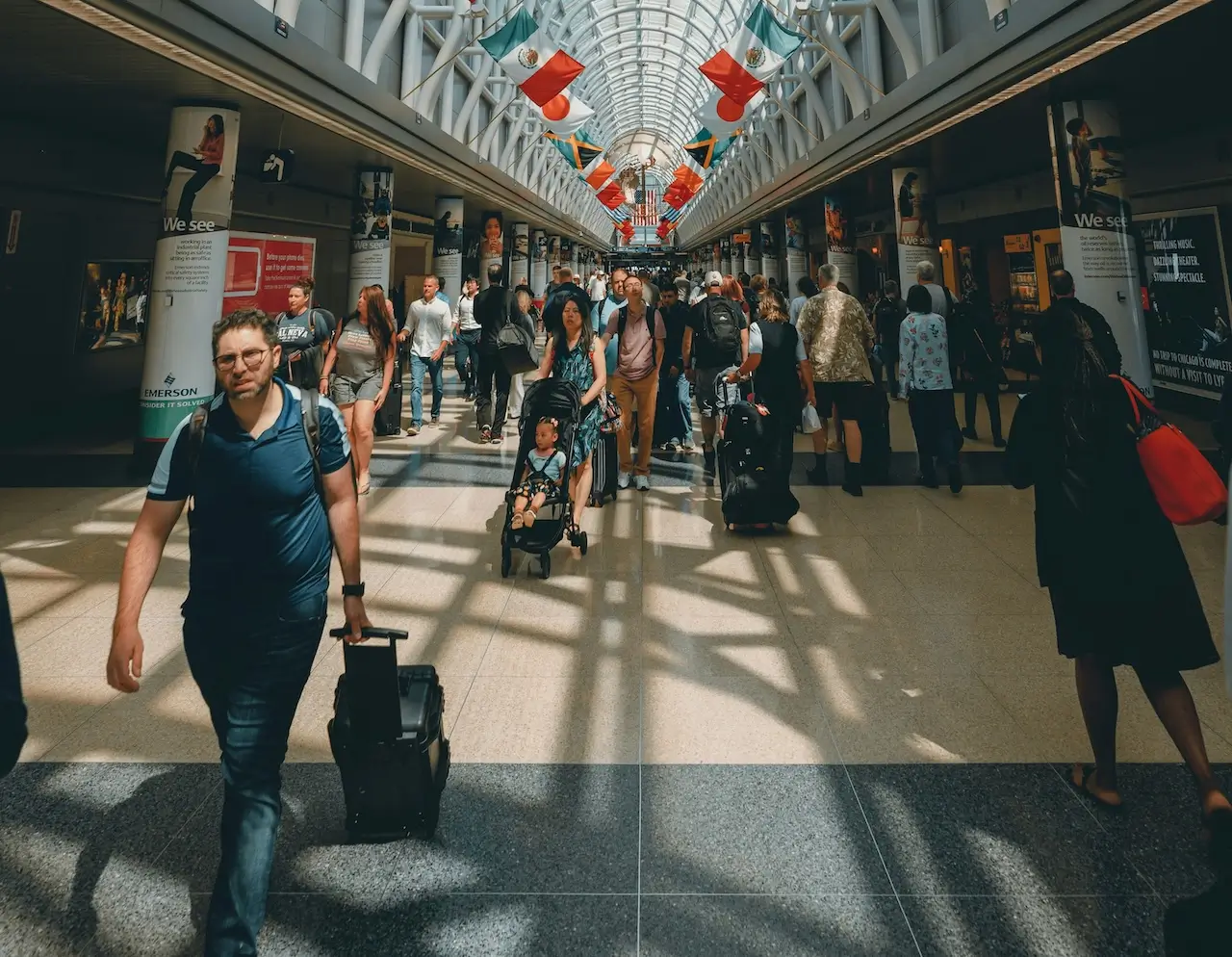 This route combines a small airport (Knoxville) and a huge hub (O’Hare). In 2025, this short-haul route had a total of 3,520 operations. Here’s what happened:
- On this route, the chance of your flight being delayed by at least 3 hours is 4.52%. The only route with a higher percentage also lands at Chicago O’Hare but departs from Traverse City (5.04%).
- TYS – ORD has a higher-than-average typical delay time of just over 338 minutes.
- When choosing what time to fly this route, avoid the daytime in favor of the morning or evening. 61.6% of significant delays happen during the day.
- Instead of flying this route, opt for the one from Knoxville to Chicago Midway, which is available through Allegiant.
#2 Chicago O’Hare (ORD) – New York JFK (JFK)
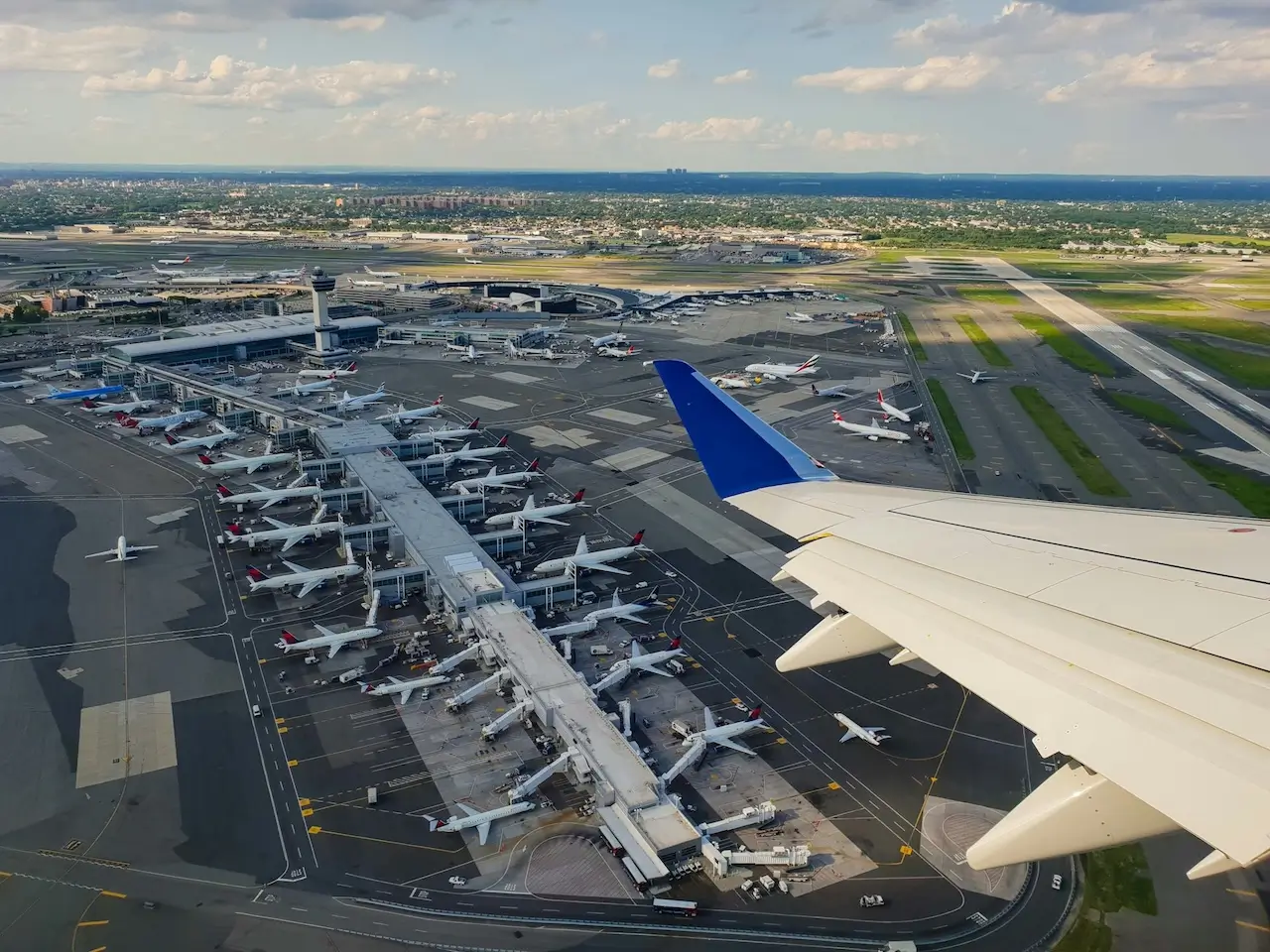 This route gets a lot more traffic than the one from Knoxville to Chicago. In 2025, the route operated 6,492 times, almost twice the volume.
- The Chicago O’Hare to New York JFK route experiences a lower LD180+ rate (2.88%) than Knoxville to Chicago, but the average LD180+ delay time is significantly higher at 424.62 minutes.
- As with the #1 route on this list, most significant delays when traveling from ORD to JFK occur during the day, 64%.
- It’s wise to consider alternate routes, like the one from nearby Milwaukee International to JFK with Delta. If that doesn’t work, be prepared for a potentially long delay that could last up to 7 hours.
#3 Austin-Bergstrom (AUS) – Dallas-Fort Worth (DFW)
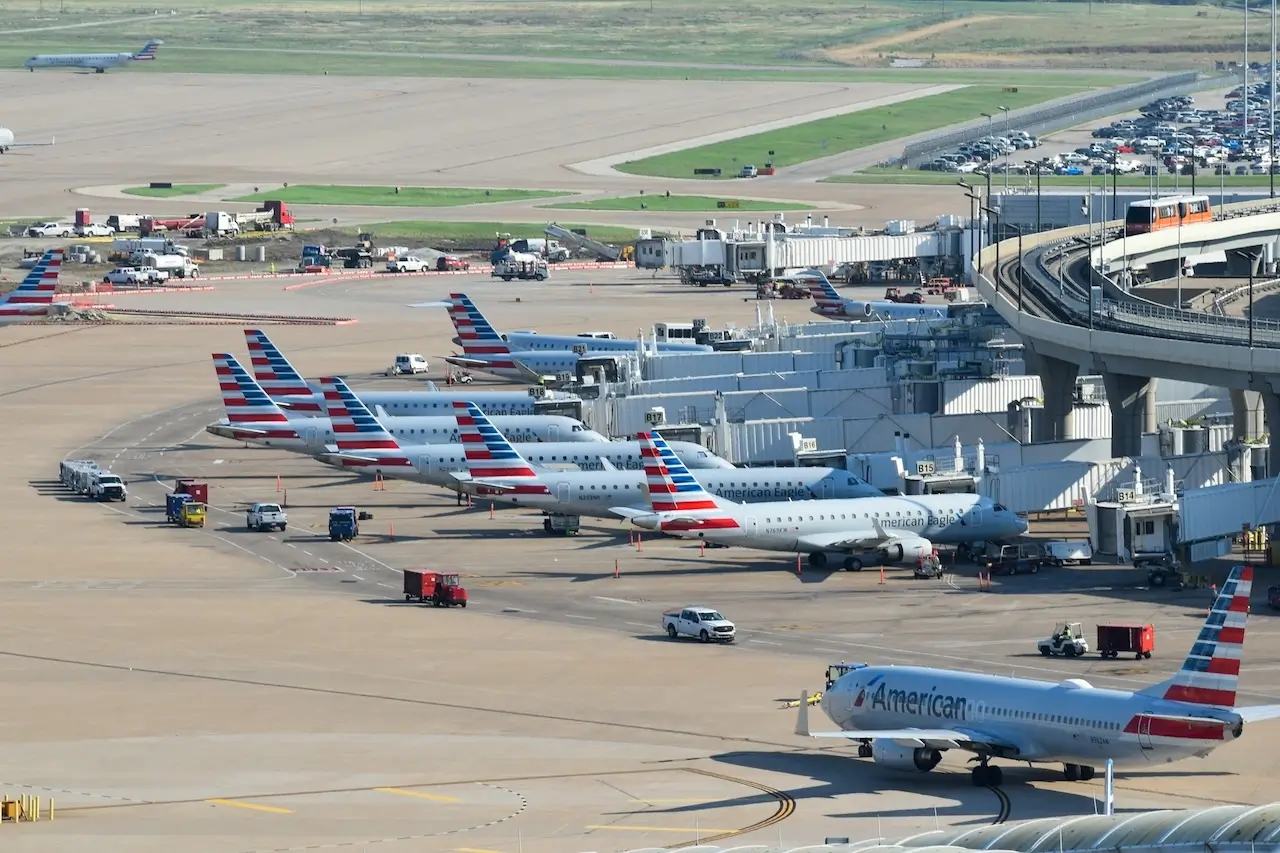 The Texas route from Austin to Dallas-Fort Worth is the shortest on the 10 worst US routes list, but that doesn’t mean you won’t encounter delays.
- The LD180+ rate is 3.07%, which falls between our #1 and #2 worst routes.
- The same is true for the average 180-minute+ delay time, which is 380.29 minutes (just under 6.5 hours).
- Since 73% of the LD180+ delays happen in the middle of the day, minimize your disruption chances by booking this route in the morning, evening, or later at night. At a stretch, this distance is drivable in 3 hours, too. You might actually save some time.
How to use AirAdvisor’s route data to minimize 3-hour+ delays
While delays of 3 hours or more aren’t exactly common, they can stretch well beyond five hours on certain routes when they do occur. Identifying these patterns early can help you make smarter booking decisions.
If you have flexibility, choose an alternate route. Chicago Midway is a good swap for O’Hare, and Newark or LaGuardia might be better than JFK, for example. In general:
- Avoid heavily congested hub-to-hub routes during peak travel periods and instead consider routing through less busy secondary airports.
- Choose itineraries with fewer tight connections.
- Always build in extra buffer time between legs, and don’t forget to allow for delays during deplaning, gate changes, security, or customs.
In many cases, US airlines will offer care during these long delays, which can be food and drinks or extend to hotel stays and transportation for overnight interruptions. Additionally, for routes involving the EU or UK, you may be entitled to flight delay compensation.
Check what you're owed and see how we can help.Check your flight
Data use rights
AirAdvisor publishes database insights based on aggregated route performance data analyzed for consumer information purposes. Journalists, researchers, and industry professionals are welcome to reference these findings with attribution. Please cite the source as: “Data source: AirAdvisor database” and include a link to the original page where the data appears. The full dataset is available upon request.
For media inquiries, data clarifications, or reuse permissions beyond citation, please contact press@airadvisor.com.
FAQs
Why is the LD180+ rate used for the worst US routes with 3-hour+ delays?
Three hours is a significant disruption that almost always impacts your travel. We use a rate so as not to penalize the more popular routes because more operations mean more potential for delays.
What makes a route more prone to long delays?
Other than just being unlucky, your route may be more at risk for delay if:
- The area around the airports routinely experiences high air traffic volume.
- The arrival or departure airport has weather-related delays.
- There are limited re-routing options available, like at smaller airports or on less popular routes.
How often is the AirAdvisor database updated?
All the database is updated daily. That way, we can ensure the most current information.
Press highlights
- 3-hour+ delays are rare, with the highest annual LD180+ rate at 5.04%, but when a disruption happens on the 10 most significantly delayed routes, the actual wait time is an average of 302 minutes.
- Long delays happen on US routes involving smaller regional airports, like Traverse City and Knoxville, and large international ones like Chicago O’Hare and JFK.
- The worst route for significant delays is from Knoxville to Chicago O’Hare, and the best route for significant delays is from London Heathrow to New York JFK.
Our final rankings are based on 2 metrics: LD180+ rate (70%) and average delay time (30%). LD180+ is the rate of arrival delays of 3 hours or more out of the total route operations. The average delay time is the average expected wait time once the flight is already delayed by at least 3 hours. The complete data set is available upon request.
Journalists and bloggers can feature this data on their site. Paste the embed code into any HTML block — it renders automatically.
<!-- AirAdvisor · US Delay Routes 2026 --> <a href="airadvisor.com/en-us/worst-us-routes..." style="width:340px; border-radius:14px; ..."> <img src="airadvisor.com/Media/images/..." /> <div>5h 39m · 463K flights · Data Report 2026</div> </a>Source: AirAdvisor proprietary flight performance database analysis of 462,980 of the worst-performing flights from January 1 to December 31, 2025, measuring LD180+ arrival delays and total delay time.

Author:
Amy LancelotteJob/Position: Senior Writer & Content Creator
Amy Lancelotte is a Senior Content Writer and editorial contributor at AirAdvisor with more than seven years of experience producing research-driven articles for global audiences. Her work focuses on travel, aviation, and air passenger rights, with an emphasis on factual accuracy, verified data, and clear, reader-first explanations.