Which European Airlines Rank Highest for Safety? A 10-Year Study of 20 Carriers
View the ranking of 20 European airlines using 10 years of safety data. See the safest airlines in Europe and whether low-cost and traditional airlines differ.


Of the 20 major European airlines in our study, Aegean Airlines ranks as the #1 safest in our 20-airline study, followed by Ryanair and Austrian Airlines.
Our goal was to compare the 20 airlines using six metrics, instead of simply reviewing accidents, to determine if there’s a link between safety and airline class (traditional vs. low-cost).
Using 10 years of data from 2016 to 2025, our findings show that 3 budget airlines are in the top 5 safest. The average scores for the 10 low-cost carriers and the 10 mainline/traditional airlines are closer than you might think: 79.2 vs. 82.8 out of 100 possible points.
European airlines feature heavily in the world’s safest airline ranking, but let’s focus on Europe only. We’ll take a closer look at the individual airlines’ scores, what exactly went into the ranking, and the important conclusions the data shows.
Key takeaways
- Aegean ranks first in AirAdvisor’s 2026 European Safety Index, with a final score of 89/100.
- Three of the top 5 airlines are low-cost ones: Ryanair, Norwegian, and SunExpress, challenging the assumption that traditional airlines are inherently safer.
- Low-cost airlines lead in fleet age, whereas traditional airlines perform better on certification and audits.
- The safety record (accidents in the 10-year period) is also remarkably similar between low-cost and traditional, scoring an average of 34.3/40 and 35.5/40, respectively.
- Our data covers six weighted metrics: safety record, certification and audit, operational safety, fleet health, pilot training, and financial stability.
2026 European airlines safety index
Rank | Airline | Type | Total |
1 | Aegean Airlines | Mainline | 89 |
2 | Ryanair | Low-cost | 86 |
3 | Austrian Airlines | Mainline | 85.5 |
4 | Norwegian | Low-cost | 85 |
5 | SunExpress | Low-cost | 84.5 |
6= | Air France | Mainline | 83.5 |
6= | British Airways | Mainline | 83.5 |
6= | Iberia | Mainline | 83.5 |
9= | Turkish Airlines | Mainline | 83 |
9= | Lufthansa | Mainline | 83 |
11 | KLM | Mainline | 82.5 |
12 | easyJet | Low-cost | 82 |
13= | Eurowings | Low-cost | 81.5 |
13= | SAS | Mainline | 81.5 |
15 | Wizz Air | Low-cost | 79.5 |
16 | Transavia | Low-cost | 79 |
17 | Vueling | Low-cost | 77 |
18 | Jet2.com | Low-cost | 73 |
19 | SWISS | Mainline | 72.5 |
20 | Pegasus Airlines | Low-cost | 64.5 |
Aegean leads, but low-cost airlines dominate the top 5
The range of scores goes from Aegean Airlines at #1 with 89/100 to Pegasus Airlines at #20 with 64.5/100.
Ryanair, in second place, is the highest-ranking low-cost carrier. The other two budget airlines in the top 5 are Norwegian and SunExpress, which is a good showing for the low-cost category.
Also of note, spots 6 to 11 are full of closely scoring traditional airlines. British Airways, Air France, Iberia, Turkish Airlines, Lufthansa, and KLM are all clustered together, scoring between 82.5 and 83.5/100.
Why Aegean ranks first in the AirAdvisor 2026 safety index
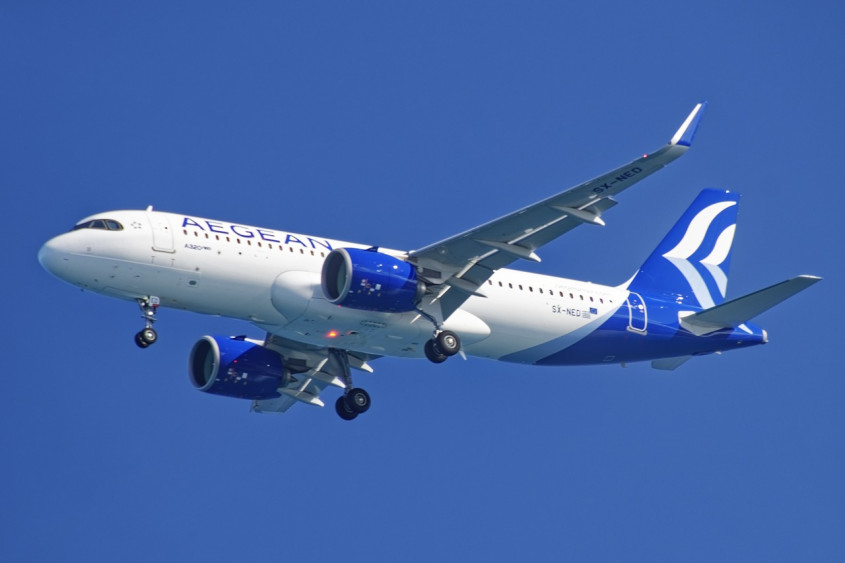
- Perfect 40/40 safety record score, with no qualifying accidents during the 10-year study period.
- Strong operational safety systems, scoring 13/15, reflecting a well-documented Flight Data Monitoring (FDM) system and Safety Management System (SMS).
- 9/10 for its young, modern fleet.
- Maximum points (5/5) for financial stability.
- Overall, a consistent performance with no weak categories.
Final score: 89/100
Why Ryanair ranks second
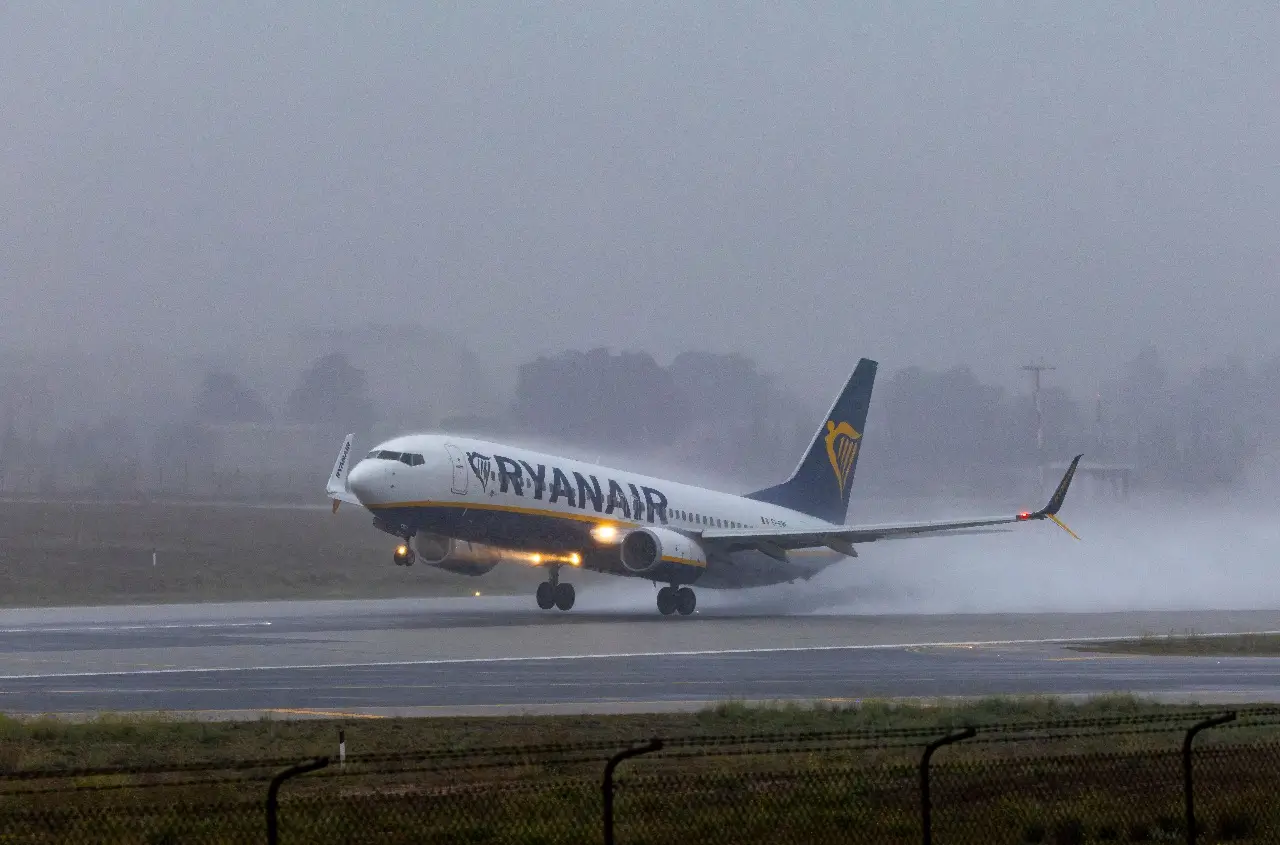 Be honest: before you look at our data table, did you think Ryanair would be in second place on our index for safety? Well, it’s true.
- Ryanair has an excellent 10-year safety record (38/40), losing only 2 points for two non-fatal accidents in 2023 (April and October).
- As Europe's largest airline by passenger volume, it’s important that it has strong operational safety systems in place (13/15).
- Ryanair also values operational flight data monitoring (OFDM) to manage risks.
- The company’s established reporting and training systems, including confidential safety reporting and threat/error management education, contribute to its pilot training score.
Final score: 86/100
Pilot training scores by European airline
How the AirAdvisor European Airline Safety Index works
Using a pool of 10 traditional and 10 low-cost European airlines, we evaluated each carrier against six weighted criteria.
The 20 airlines were selected as the 10 largest eligible low-cost and 10 largest eligible traditional/mainline carriers operating in Europe, based on 2025 flight volumes reported by EUROCONTROL.
Airlines also needed a sufficiently continuous operating history across 2016–2025 to allow for a comparable ten-year safety assessment.
Category | Weight | What it measures |
Safety record | 40% | Accident history and exposure |
Certification & audit | 20% | Audit history and regulatory oversight |
Operational safety | 15% | SMS, flight-data monitoring, reporting systems, etc. |
Fleet | 10% | Fleet age and technical profile |
Pilot training | 10% | Training systems and advanced programmes |
Financial stability | 5% | Financial and operational resilience |
For fairly obvious reasons, the airline safety record is the highest weighted metric. It evaluates whether the airline has any accidents, as published in the IATA Safety Report, between 2016 and 2025 (inclusive).
The 40% for the airline’s safety record emphasizes the importance of using actual performance as an indicator while still leaving room to account for the systems designed to prevent future incidents.
Airline safety systems (15%), fleets (10%), training (10%), and financial performance (5%) came from publicly available regulatory and company information.
The methodology also uses International Civil Aviation Organization (ICAO) data on the effectiveness of national aviation oversight. This reflects the strength of the regulatory environment in an airline's home country, which is part of the certification and audit category.
Are low-cost airlines as safe as traditional airlines?
Yes, we see little difference between the two. We took the 10-airline average for both categories to see if there was a large discrepancy between individual categories and the overall score:
Measure | Low-Cost average | Traditional average |
Overall score /100 | 79.2 | 82.8 |
Safety record /40 | 34.3 | 35.5 |
Operational safety /15 | 10.6 | 10.6 |
Certification & audit /20 | 15.9 | 18.4 |
Fleet /10 | 7.8 | 7.1 |
Low-cost and traditional airlines have similar safety records
The difference between the two in the safety record category is only 1.2 points.
The two groups actually scored the same for operational safety systems. That means there’s very little difference between the airlines in important areas like safety management, flight-data monitoring, and reporting systems.
Traditional airlines have an advantage in audits & certification
The clearest win for traditional airlines was in the certification & audit performance, where they averaged a score 2.5 points higher than the low-cost counterparts. This alone accounts for a substantial part of the 3.6-point gap between the two groups' overall average scores.
Low-cost airlines’ fleets are younger
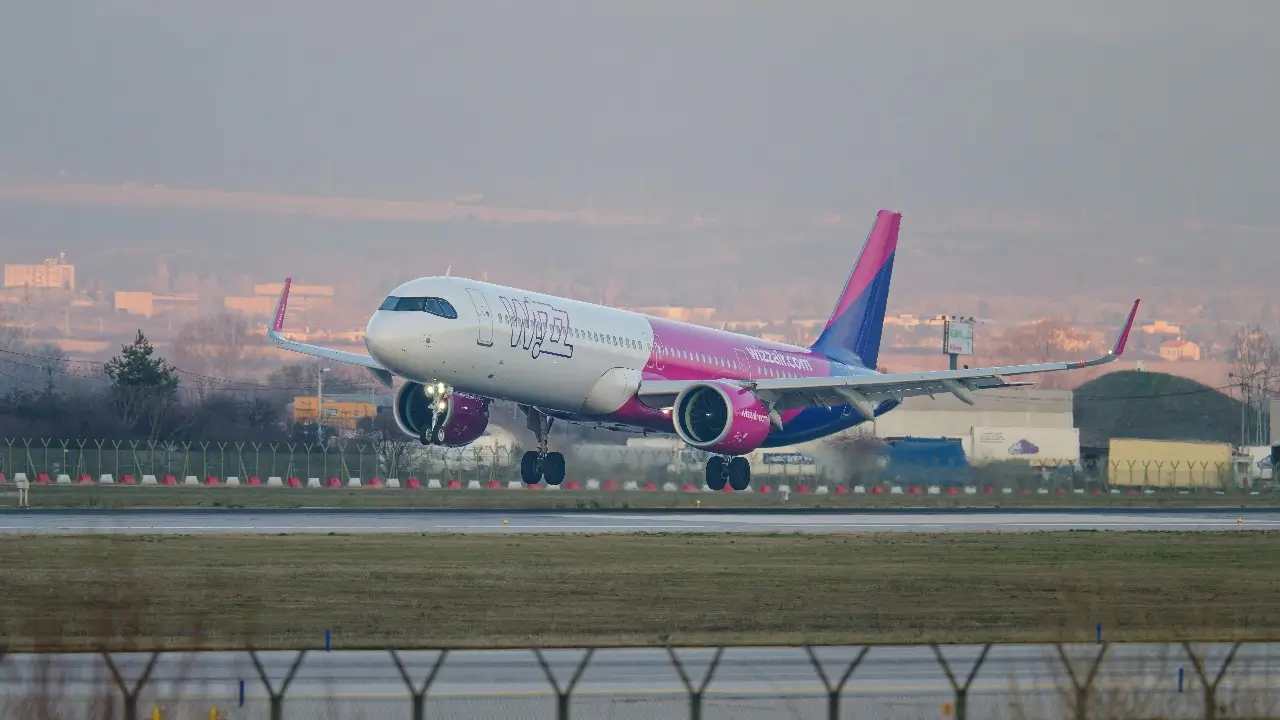 Low-cost airlines came out ahead for fleet age & technical profile by 0.7 points. Wizz Air and Pegasus both scored a perfect 10/10 in this category. Simply put, that shows us that cheaper fares don't necessarily mean older aircraft.

A young fleet can bring technological and efficiency advantages, but aircraft age should never be treated as a safety rating on its own. An older aircraft that is properly maintained can continue operating safely for decades.
Anton Radchenko, Founder & CEO of AirAdvisor.
5 things the ranking tells us about European airline safety
- Three low-cost carriers rank in the top five. Ryanair, Norwegian, and SunExpress all make the top 5 of the AirAdvisor Safety Index. The other two traditional airlines in the top 5 are Aegean Airlines and Austrian Airlines.
- The two airline categories achieve relatively close average scores. Across the 20 airlines analysed, low-cost carriers averaged 79.2/100, compared with 82.8/100 for traditional airlines (3.6-point difference). The safety record scores were also close, at 34.3/40 and 35.5/40, respectively.
- Certification and audit performance is where the main difference is. Our 10 traditional airlines scored 2.5 points higher on average in this category. When the average gap between the two business model averages is only 3.6 points, this category alone accounts for 70% of that difference.
- Low-cost carriers have higher fleet age scores. They averaged 7.8/10, compared with 7.1/10 for traditional airlines.
- No single category determines an airline’s final position. The index combines six weighted criteria, so a strong score in one area doesn’t automatically result in a high overall ranking. For example, several airlines scored 40/40 for safety record but finished outside the top 5 (British Airways, SAS, Eurowings). Equally, a lower position in the index should not be interpreted as meaning that an airline is unsafe.
What travellers should look for when assessing airline safety
The truth is, diving deep before a flight to review an airline’s accident history, audit results, or safety-management systems before booking your flight isn’t needed.
European commercial aviation operates within a highly regulated safety framework, and the main thing to remember is that serious accidents are exceptionally rare.
Our Safety Index results show that ticket price, business model, and fleet age aren’t shortcuts by which to judge safety. Instead, take a well-rounded approach, looking at all factors at once.
The difference between low-cost and traditional airlines in terms of scoring is minimal. So, whichever airline you choose, the wider context is reassuring: commercial flying is extremely safe.
Sure, our rankings can reveal differences in safety records, oversight, training, and operational systems, but don’t turn small differences between airlines into reasons to worry about your next flight.

Author:
Amy LancelotteJob/Position: Senior Writer & Content Strategist
Amy Lancelotte is a Senior Content Writer and editorial contributor at AirAdvisor with over seven years of experience producing research-based articles for international audiences. Her work focuses on travel, aviation, and air passenger rights, with an emphasis on factual accuracy, verified data, and clear, reader-first explanations.