The best EU airports for rest & recharge 2026
We scored 25 major EU airports on sleep pods, shower access, lounges and overnight usability. Warsaw and Prague top the list, but the results for major hubs may surprise you.


Every year, more than 1.5 billion travellers worldwide take connecting flights . . .proof that the layover isn't going anywhere. But while nonstop routes do save time, they often come with a higher price tag and less flexibility. So, for millions of passengers, the real challenge isn't the flight itself; it's the wait between connections.
Whether it's a tight connection that's spiralled into a six-hour delay, an overnight flight, or a pre-dawn departure that demands an early arrival, spending serious time in the airport is an increasingly common part of modern travel. So the question becomes: Which European airports are actually prepared for it?

To find out, we created the AirAdvisor Rest & Recharge Index (ARRI), a data-driven ranking of 25 major EU airports based on their measurable investment in rest infrastructure.
Unlike other rankings based on passenger reviews or café quality, the ARRI focuses exclusively on the physical infrastructure available to passengers who need to rest:
- Sleep pods,
- Quiet zones,
- Shower access,
- Lounge density, and
- Whether you can actually stay in the terminal overnight.
Here's what we found.
The Top 10: EU's best airports for rest & recharge
The table below shows the full top 10, ranked by their ARRI score out of a possible 40.
# | Airport | Country | ARRI Score |
1 | Warsaw Chopin (WAW) | Poland | 33.7 |
2 | Prague Václav Havel (PRG) | Czech Republic | 33.7 |
3 | Frankfurt Airport (FRA) | Germany | 29.3 |
4 | Munich Airport (MUC) | Germany | 28.75 |
5 | Helsinki Airport (HEL) | Finland | 27.8 |
6 | Madrid–Barajas (MAD) | Spain | 26.5 |
7 | Amsterdam Schiphol (AMS) | Netherlands | 26.5 |
8 | Budapest Ferenc Liszt (BUD) | Hungary | 24.5 |
9 | Stockholm Arlanda (ARN) | Sweden | 22.9 |
10 | Lisbon Humberto Delgado (LIS) | Portugal | 22.1 |
What separates the best from the rest? Showers
Across all 25 airports analysed, shower accessibility proved to be one of the single most decisive factors in the rankings. It seems obvious in hindsight. After a long-haul flight or an overnight delay, access to a shower can be like a religious experience, but the divide among airports on this one point is striking.
We categorised shower access into three tiers:
- Free public showers available to any passenger, no fee required
- Paid public showers accessible without a lounge membership, but for a fee
- Lounge-only showers (lowest), restricted to lounge members or day-pass purchasers
Only Warsaw and Prague offer fully free shower access. Frankfurt, Munich, Madrid, and Amsterdam all provide paid public showers accessible to anyone, just not free.
By contrast, the majority of airports in the index restrict showers entirely to lounge access, meaning that unless you hold a premium membership or pay for an expensive day pass, a post-flight freshen-up simply isn't available to you.
This single variable was enough to push otherwise well-equipped airports, like Budapest, Stockholm, and Lisbon, further down the rankings despite strong scores in other areas.
What makes the Top 5 airports ideal for resting between flights
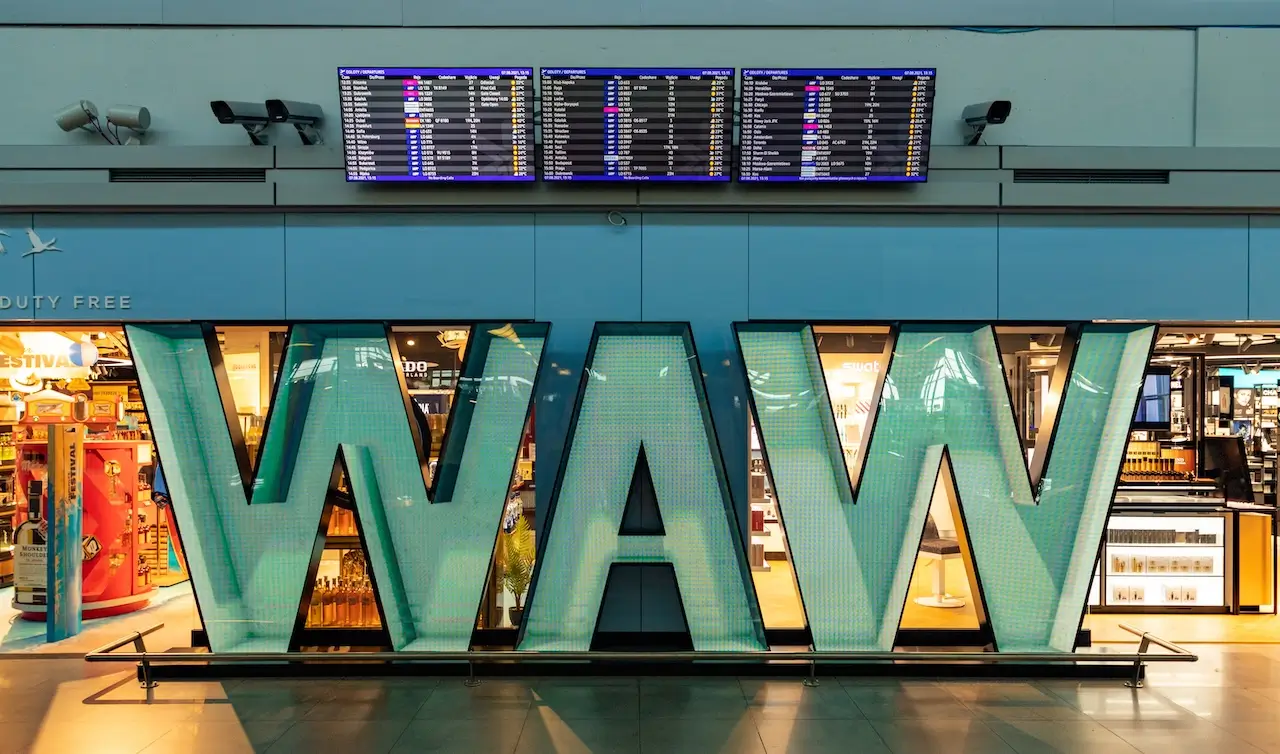
#1 Warsaw Chopin Airport (WAW)
Warsaw Airport combines multiple rest facility types, including sleep capsules and quiet zones, with free public showers and 24-hour passenger access. All this makes it the most structurally prepared EU airport for extended layovers. It ranks above its Czech counterpart due to higher passenger volumes. WAW handles roughly 40% of Poland’s total air traffic.

Where to rest: Sleep capsules are located airside in the departure hall, bookable in advance or on arrival. Quiet zones are signposted from the main concourse.
Showers: Free public showers are available airside without any lounge membership. Just follow signs from the main terminal corridor.
Overnight tip: The terminal operates 24 hours with no access restrictions for passengers with valid travel documentation. Gate areas at the far ends of the terminal are noticeably quieter after 11pm.
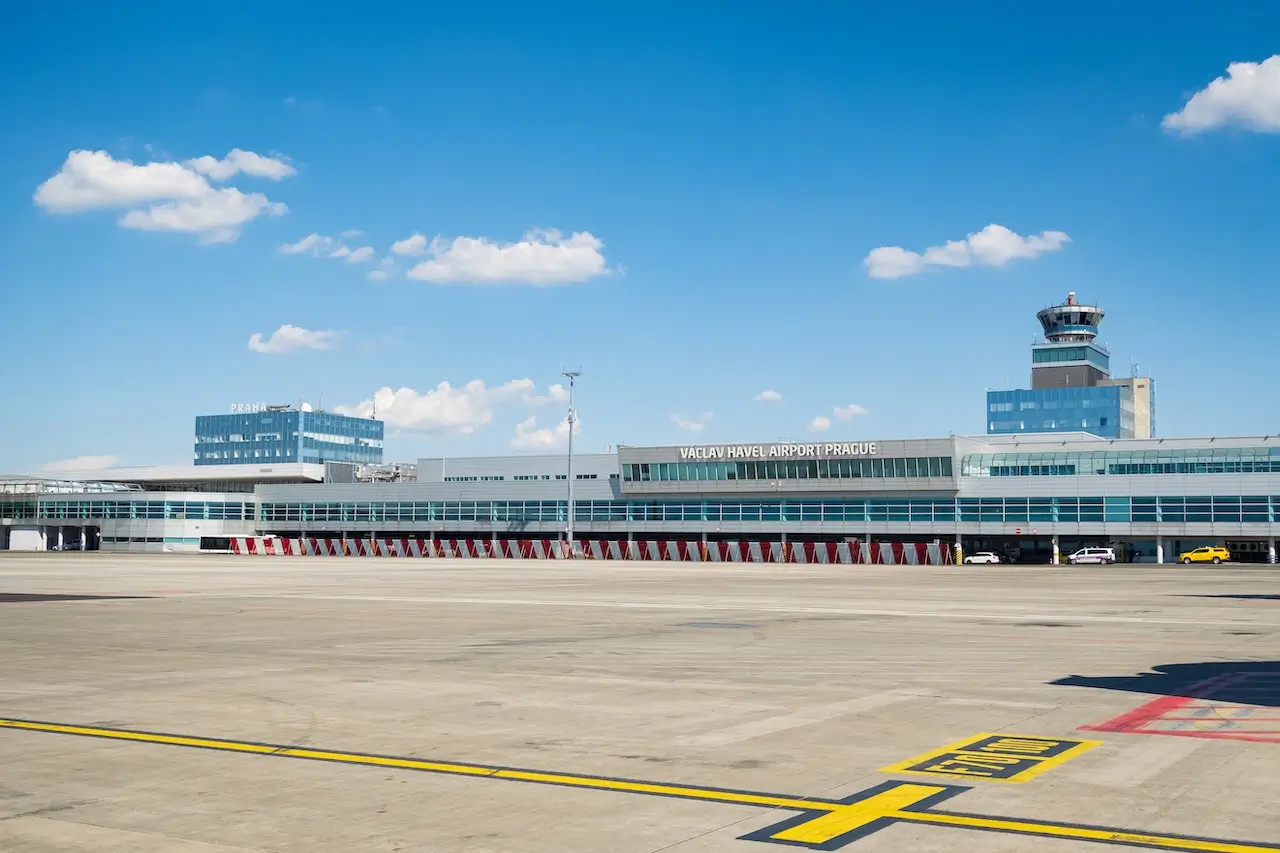
#2 Prague Václav Havel Airport (PRG)
Prague Airport offers dedicated relaxation areas and meditation rooms alongside free shower access, positioning it as one of Europe’s strongest mid-sized hubs for recovery during transit.
Where to rest: The dedicated relaxation area and meditation room are located in Terminal 2, airside. Both are free to use and open around the clock.
Showers: Free showers are available to all passengers in Terminal 2, no lounge membership required.
Overnight tip: Prague is one of the calmer overnight airports in Europe. The terminal is genuinely quiet after midnight, and the meditation room is particularly useful for passengers who need darkness and silence rather than a flat surface.
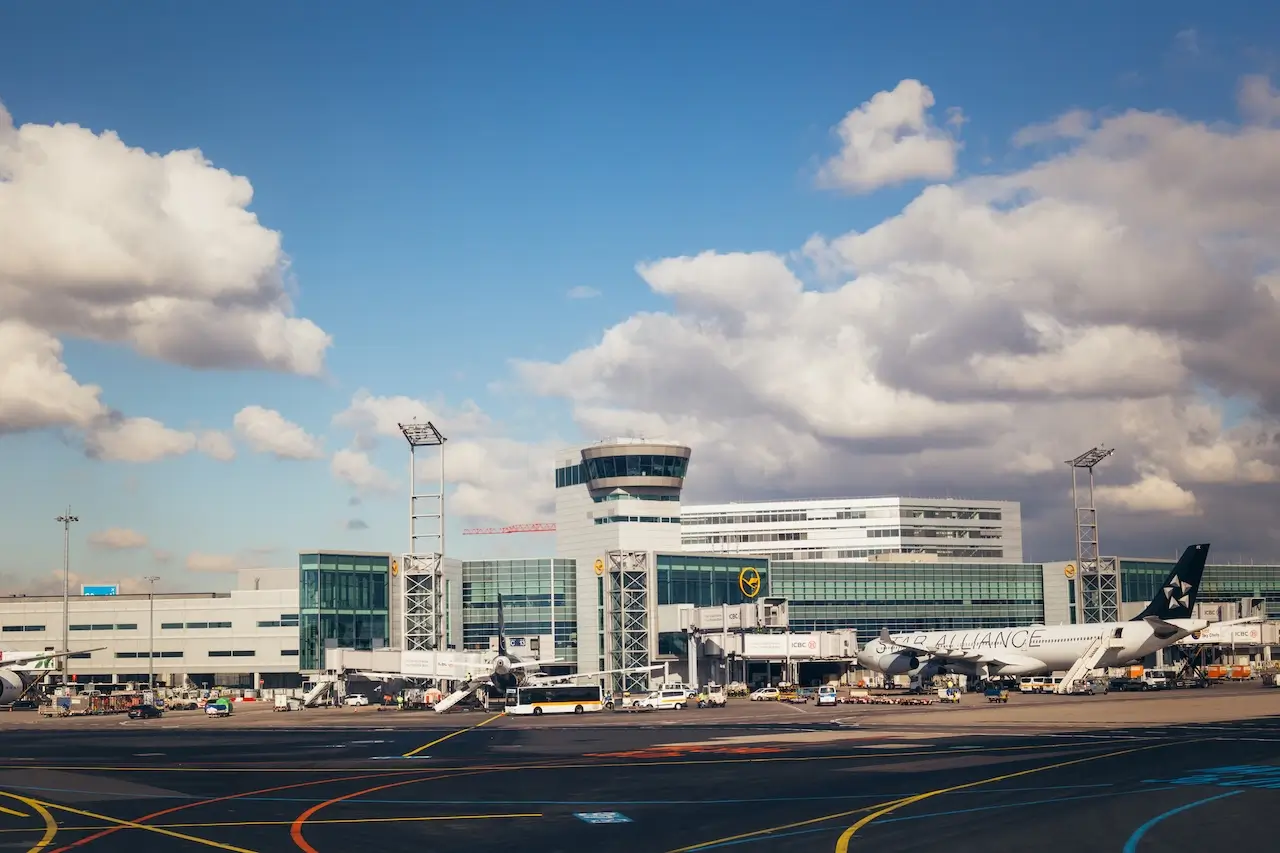
#3 Frankfurt Airport (FRA)
As a major long-haul hub, Frankfurt Airport delivers dedicated rest zones and paid public showers, maintaining strong accessibility despite high passenger volumes.
Where to rest: Leisure Zones are located in Terminal 1 (Concourse B and C) and include reclining chairs and lower lighting. The dedicated Quiet Room is accessible airside.
Showers: Paid public showers are available in Terminal 1 without lounge access. Expect to pay around €8–12 (£7–10).
Overnight tip: Frankfurt's sheer size works against you if you don't know how to get around. Terminal 1 Concourse B tends to be quieter overnight. The AIRail terminal connection means you can also reach the city centre by train in under 15 minutes, if you'd prefer a hotel.
#4 Munich Airport (MUC) AirAdvisor Score: 28.75
Munich Airport stands out for its Napcabs and structured rest areas, reflecting clear investment in sleep infrastructure.
Where to rest: Napcabs, private, lockable sleeping cabins with a bed, power, and Wi-Fi, are bookable by the hour in Terminal 2. Recreation Areas with reclining seating are also available in both terminals.
Showers: Paid public showers are available near the Napcabs area in Terminal 2.
Overnight tip:Security checkpoints close around 10pm and reopen around 4:30am, so you must be airside before then if you want to stay in the departure zone. If you miss the window, the landside area remains accessible but is significantly less comfortable.
#5 Helsinki Airport (HEL) AirAdvisor Score: 27.8
Helsinki Airport offers one of the widest varieties of rest facilities in the ranking, including sleep pods and quiet areas, supported by plenty of lounges and 24-hour access.
Where to rest: GoSleep Pods near gates 12 and 40 offer private, enclosed sleeping spaces bookable by the hour. The Maja Living Room at Gate 52 is completely free and open 24/7. Quiet areas with dimmed lighting are available near gate 35 in the Schengen zone.
Showers: These are available through lounge access only. The most accessible option is the Aspire Lounge, which offers day passes.
Overnight tip: The Maja Living Room is a hidden gem. It’s a genuinely comfortable, well-designed free space that most transit passengers don't know about. Head there before looking at the paid options.
The bottom 5: Airports least suited for recharging between flights
Five airports propped up the bottom of our ranking. The common thread? A lot of passengers, and not nearly enough facilities to look after them all.
Rank | Airport | Country | Score | Key Limitation |
21 | Spain | 17.2 | One rest type; showers lounge-only | |
22 | Spain | 16.6 | Only a breastfeeding room; just 1 lounge | |
24 | Paris Orly (ORY) | France | 15.7 | No overnight access; basic relaxation only |
23 | Porto Francisco Sá Carneiro (OPO) | Portugal | 15.1 | No rest zones; showers lounge-only |
25 | Brussels Airport (BRU) | Belgium | 14.35 | No rest zones; limited overnight access |
A quick caveat before you write off any of these airports entirely: A low score here doesn't mean a bad airport. It just reflects what's available if you need to sleep, shower, or sit quietly for a few hours. For a quick connection or a daytime layover, most of these airports are perfectly fine.
That said, two in particular are worth a specific warning if an overnight stay is ever in the cards.
- Paris Orly effectively closes between 12:30am and 3:30am, which means that if your delay stretches into the wee hours, you may be asked to leave the building. It's one of the few major European airports where that's a real possibility, and it catches lots of passengers off guard.
- Brussels Airport also has restricted hours. Once security closes for the evening, staying airside simply isn't an option. Meanwhile, the landside area offers very little to keep you comfortable until things reopen in the early morning. If you're connecting through Brussels on a late-night flight, it's worth having a backup plan.
How to survive an airport overnight: 6 things to do before you sleep
Planned layover or surprise delay, whatever your situation, here are a few simple things that can be the difference between a horrible night and a perfectly manageable one.
- Work out whether you can stay airside: Post-security is always the better option because it’s quieter, safer, and where the good facilities are. Check before you travel, and keep your boarding pass on you, as many airports want to see proof that you’re flying before letting you stay.
- Head for the far end of the terminal: Gates at the outermost ends of terminals are almost always the quietest. They have fewer people, less noise, and often more space to stretch out. Avoid anything near information desks, cleaning stations, or main walkways.
- Secure your stuff before you sleep: Loop a bag strap around your leg or wrist, and keep your passport and boarding pass zipped on your person and not in a bag nearby.
- Pack a layer Terminals are often deliberately kept cold overnight. A thin fleece or packable jacket in your carry-on is one of the most underrated travel items you can bring.
- Charge everything before you close your eyes: Charging stations fill up at night, so charge your phone to 100%, set a loud alarm, and then sleep.
- Don't forget you might be entitled to a hotel: If the airline caused your delay, EU Regulation 261/2004 may require them to provide accommodation. Just ask an agent politely but directly, and cite the regulation. Even if the delay is your own doing, airport hotels are often cheaper than people assume, and a real bed beats a terminal chair any day.
Stranded at an airport? Know your rights
If a longer-than-expected stay at the airport is the result of a delayed or cancelled flight, it's important to know that you may be able to get something back for the inconvenience.
Under EU261, airlines operating flights to or from EU airports are required to provide passengers with:
- Meals and refreshments during delays of two hours or more (depending on flight distance)
- Hotel accommodation and transfers when an overnight stay becomes necessary
- Financial compensation of between €250 and €600 (£220 to £520) per passenger for significant arrival delays caused by the airline.
Many passengers don't even realise they're entitled to these benefits, or don't know how to claim themClaim with AirAdvisor and get up to €600 in compensation. Find out how much you’re owed in minutes.Check Your Flight
Methodology: How the ARRI was calculated
The AirAdvisor Rest & Recharge Index evaluates airports based exclusively on documented, publicly available in-terminal infrastructure. No passenger reviews, pricing data, or subjective assessments were used. Each of the 25 airports was assessed across five weighted criteria:
Weight | Criterion | Description |
35% | Rest facility types | Number of distinct formats (quiet zones, sleep pods, cabins, meditation rooms) |
20% | Shower accessibility | Free public, paid public, or lounge-only |
20% | Lounge density | Per 10 million passengers |
15% | 24-hour access | Full, limited, or none |
10% | Infrastructure intensity | Adjusted for passenger scale |
Higher scores reflect broader, more accessible rest infrastructure. The full methodology and scoring framework are available upon request.
To sum up
No amount of sleep pods or free showers makes an unexpected overnight delay enjoyable. But if your airline is to blame, you shouldn't have to foot the bill — or fight for compensation alone. AirAdvisor has helped over 800,000 passengers across 182 countries claim what they're owed. Check your flight at airadvisor.com and find out if you have a claim in minutes.

Author:
Joanna TeljeurJob/Position: Senior Editor & Content Lead
Joanna Teljeur is a senior editor and writer with 15+ years of experience in editorial leadership, journalism, and content development, specialising in consumer rights, aviation law, and public-interest reporting. Her work focuses on transforming complex regulatory and legal topics into clear, accurate, and accessible content for international audiences.