The world's riskiest airports for missed connections this summer, ranked
We ranked 20 global airports by missed connection risk in the summer 2026. The results aren't what most frequent flyers expect. Is your hub on the list?


Missing a connecting flight doesn't just cost you time. It can cost you a hotel room, a meeting, a holiday, and an entire day of your life spent in a terminal. But most people don't realise that the airport they chose to connect through matters more to the outcome of their trip than almost any other decision they made when booking. In fact, it matters even more than your choice of airline.
So to get a better idea of which airports are the worst and best for connections, AirAdvisor ranked 20 of the world's busiest hub airports on how likely they are to cause a missed connection this summer. Some of the results are reassuring, several are alarming, and a few will make you rethink every connection you’ve booked in the last five years.
Key findings
- If you're connecting through Dallas this summer, you're taking a real risk. Roughly 1 in 6 flights out of Dallas/Fort Worth ran at least an hour late last summer. Not during a storm. Not in a difficult week. As a consistent, all-summer baseline.
- No American hub made it out of the danger zone. Dallas/Fort Worth, Chicago O'Hare, New York JFK, and Miami International all rank in the high-risk tier. Every single US airport in the ranking. None of them escaped it.
- The world's safest connecting airports are probably not on your shortlist. Stockholm Arlanda and Warsaw Chopin top the global ranking. Fewer than 1 in 30 of their flights ran significantly late last summer. That is more than four times safer than Dallas.
- Delhi beats Heathrow, Paris, and Frankfurt. That is not a typo. Delhi Indira Gandhi ranks 8th out of 20 global hubs, comfortably in the low-risk tier, above all three of those European airports on actual performance data.
- A failed connection could put money back in your pocket, but only if you booked correctly. If all your flights are on a single booking and the airline caused the problem, you may be entitled to up to £520 (€600) in compensation. Book two separate tickets and that protection is gone entirely.
How AirAdvisor scored each airport
Our methodology: AirAdvisor scored 20 major hub airports on four criteria:
- How often flights run at least an hour late (45% of the score),
- Cancellation rate (25%),
- Average delay length (15%), and
- Total summer flight volume, scored in reverse (15%)

Each airport receives a score from 5 to 10, where higher means safer.
The data combines summer 2025 performance (70% weight) with Q1 2026 (30%), giving a baseline that is both seasonally relevant and current. Figures for 16 airports come from AirAdvisor FlightSignal™. Delhi, Seoul, Kuala Lumpur, and Shanghai are sourced from official national aviation authorities.
AirAdvisor Summer Connection Risk Index 2026
Full ranking - 20 Global hubs
Score 5-10. Higher = safer for connecting passengers.
# | Airport | Score | Risk tier |
1 | Stockholm Arlanda ARN | 9.30 | Safest |
2 | Warsaw Chopin WAW | 9.15 | Safest |
3 | Madrid Barajas MAD | 8.65 | Low risk |
4 | Lisbon Humberto Delgado LIS | 8.65 | Low risk |
5 | Rome Fiumicino FCO | 8.55 | Low risk |
6 | Barcelona El Prat BCN | 8.40 | Low risk |
7 | London Heathrow LHR | 8.15 | Low risk |
8 | Delhi Indira Gandhi DEL * | 8.10 | Low risk |
9 | Paris Charles de Gaulle CDG | 8.00 | Low risk |
10 | Frankfurt Main FRA | 7.95 | Moderate |
11 | Amsterdam Schiphol AMS | 7.90 | Moderate |
12 | Los Angeles International LAX | 7.75 | Moderate |
13 | Seoul Incheon ICN * | 7.60 | Moderate |
14 | Kuala Lumpur KLIA KUL ** | 7.55 | Moderate |
15 | Atlanta Hartsfield-Jackson ATL | 7.15 | Moderate |
16 | Shanghai Pudong PVG ** | 7.00 | Moderate |
17 | Miami International MIA | 6.85 | High risk |
18 | New York JFK JFK | 6.75 | High risk |
19 | Chicago O'Hare ORD | 6.60 | High risk |
20 | Dallas/Fort Worth DFW | 6.15 | High risk |

*Score from official national civil aviation authority data: DEL (DGCA, India), ICN (IIAC/MOLIT, South Korea.
**Score estimated from CAAM (KUL, Malaysia) and CAAC (PVG, China).
The five safest airports for connecting flights this summer
Let’s start with the good news.

Stockholm Arlanda - lowest connection risk globally
The world's most reliable major hub for a summer connection is Stockholm Arlanda with fewer than 1 in 35 of its departures running significantly late last summer.

Warsaw Chopin - 2nd safest for connecting flights
Warsaw Chopin ranks second, with just around 1 in 30 flights operating behind schedule. Neither of these airports is the one most passengers typically think of when they are planning a European connection, but both of them are more reliable than most.

Madrid Barajas - 3d safest for connecting flights
Madrid Barajas is the best-performing major Western European hub in the entire index and ranks 3rd, making it even more reliable than Heathrow, Paris CDG, Frankfurt, and Amsterdam. So if you can, route your connection through Madrid and you’ll have a better chance of getting to your destination on time.

Lisbon Humberto Delgado - tied with Madrid at 8.65
Lisbon scores 8.65, the same as Madrid Barajas in third. The ranking separates them on volume, not reliability. For connecting passengers this summer, both airports perform at the same level. If you can route through either one, the risk is equal.

Rome Fiumicino - low-risk through peak Mediterranean traffic
Rome Fiumicino scores 8.55 and holds its low-risk position through the same summer months when Mediterranean traffic peaks. It ranks above Frankfurt, Paris CDG, and Amsterdam on this index, all airports operating at comparable volume.
So, what do these five airports have in common? First, they don’t always operate at capacity and if something does go wrong and causes delays and cancellations, they can recover more quickly unlike some of the other airports in this ranking.
The five airports where you’re more likely to miss your connecting flight
Shanghai Pudong sits in the moderate risk category at number 16. It is not in the danger zone, but the data is harder to trust here than anywhere else in this ranking. This is because China's aviation authorities don’t measure on-time performance, but whether or not the flight operated. So, while Pudong might look like a safe moderate-risk option, what that score is actually telling you is that planes left the airport - not that they left on time.
Miami Airport is where the real risk for missed connection begins. About 1 in 8 flights ran at least an hour late last summer mostly because of the almost daily thunderstorms that tend to occur there between June and September. And these thunderstorms can easily shut down airport operations for an hour with no warning. If your flight is delayed at Miami, expect to wait longer than you would almost anywhere else. Once it falls behind, it stays behind.
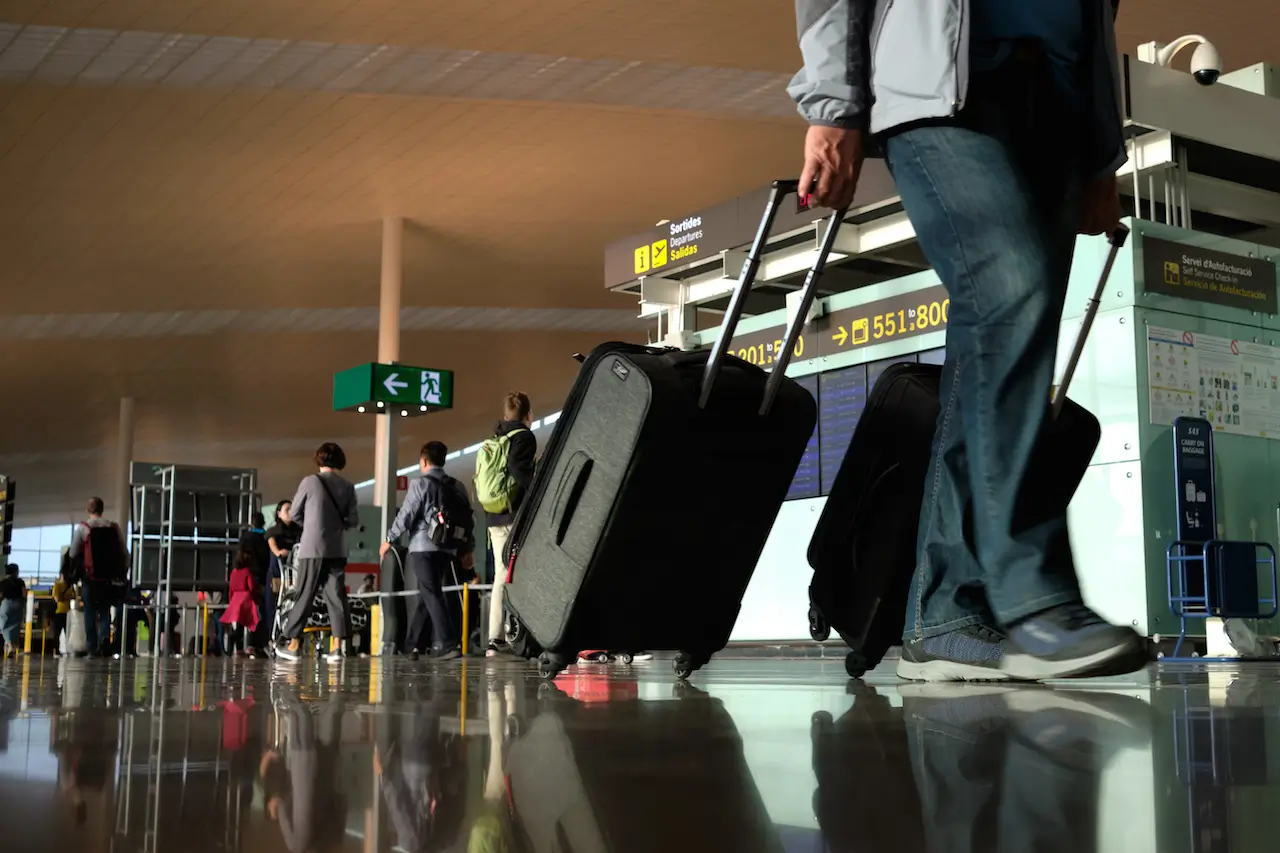 New York JFK: Around 1 in 10 JFK flights ran at least an hour late last summer. Among the four airports to avoid, JFK looks best on paper, but keep in mind that it shares New York's airspace with LaGuardia and Newark. Also, all three are managed by the same air traffic controllers. When Newark backs up, JFK slows down too. A delay at one airport can quickly become a delay at all three. So if you have a connection through JFK, remember that you’re booking a connection through one of the most congested airspace in the country.
Chicago O'Hare: About 1 in 7 O'Hare flights ran at least an hour late last summer. It's the second-busiest airport in the country, it sits squarely in America's summer storm season, and it runs at full capacity all summer with a very small margin for flight disruptions.
So when one flight is delayed or cancelled, it quickly leads to countless knock-on delays. If you're connecting through Chicago, remember that you’ll need more time than the booking system gave you.
Dallas/Fort Worth: About 1 in 6 Dallas flights ran at least an hour late last summer, on completely ordinary days when nothing unusual was going on. When a storm or any other disruption rolls through, it gets worse. So, if you’re booking through Dallas, make sure you have at least 90 minutes in between flights.
The worst four airports in this ranking are also the main gateways for World Cup travel
The FIFA World Cup runs from 11 June to 19 July 2026, across venues throughout North America. Tens of millions of international fans will make that journey, and the vast majority of those flying in from Europe and South America, will transit through the same airports that sit at the bottom of this ranking.
Dallas/Fort Worth is one of the primary entry points for fans heading to the Texas venues. Chicago, JFK, and Miami handle the bulk of the transatlantic traffic for the rest.
None of these airports will change between now and June. The runways, airspace constraints, and delay profiles that produced last summer's figures will be the same. The only thing that will be different is the number of passengers moving through them, and that number will increase significantly.

If you are flying to the World Cup through any of these airports, you will need to allow more time for connections.
The layover the airline sold you was legal, but it might not be long enough
Every connection you’ve ever booked met the Minimum Connection Time (MCT) for that airport. MCT is the shortest layover that can be legally sold. It’s set by airlines, airports agree to it, and booking systems even enforce it. Also, it’s built on the assumption that your inbound flight will arrive roughly on time.
At an airport where 1 in 7 flights runs at least an hour late on an ordinary summer day, that assumption almost always fails. For any of the four high-risk airports in this ranking, aim for at least two to three hours on peak summer travel dates.
Understanding why major hubs produce delays at this scale makes clear that none of this gets easier once summer begins.
If you miss a connection you could be owed money
If your flights were on one booking, and the airline caused the delay or cancellation that made you miss your connecting flight, you have some legal protections. What you are owed after a missed connection is considerably more than most passengers realise, and the majority never claim it.
However, if you bought two separate tickets and arranged your own connection, you are largely on your own. Airlines treat separate bookings as separate contracts. If the first flight runs late and you miss the second, the carrier operating that second flight has no legal obligation to rebook you, accommodate you, or pay compensation.
What to do next
Flying through a high-risk airport this summer but haven’t travelled yet?
Check that all your flights are on a single booking. If they are, you are protected if something goes wrong. If you booked separately, you are not.
Your connection failed last summer and you haven’t filed a claim:
Chances are, you still have time to file a compensation claim. In England and Wales, you have up to six years to file against an airline, and AirAdvisor can check whether your flight qualifies in a few minutes. If it does, the team handles everything from there, including the paperwork, the airline correspondence, the legal argument if it comes to that. You submit the details, and we take it from there.
Check if your flight qualifies
You want automatic protection before the next disruption:
AirAdvisor+ launches soon. When a flight is delayed three or more hours, cancelled, or causes a missed connection, a €200 payout reaches your account automatically within hours, without filing a claim. Any compensation owed under EU261 or UK261 is handled at 0% service fee. You keep all of it. Early access is open now.

Tired of chasing airlines?
Get paid within hours.
Automatic protection up to €10,800 — payouts within hours if your trip is disrupted.

Author:
Joanna TeljeurJob/Position: Senior Editor & Content Lead
Joanna Teljeur is a senior editor and writer with 15+ years of experience in editorial leadership, journalism, and content development, specialising in consumer rights, aviation law, and public-interest reporting. Her work focuses on transforming complex regulatory and legal topics into clear, accurate, and accessible content for international audiences.